Phone:
(832) 555-0197
Physical address:
7327 W Bellfort Ave, Suite 210
Houston, TX 77071
Email address:
contact@mysafefoundation.com

Phone:
(832) 555-0197
Physical address:
7327 W Bellfort Ave, Suite 210
Houston, TX 77071
Email address:
contact@mysafefoundation.com

When you walk into your basement and feel that unmistakable dampness — the musty smell, the humid air, the faint signs of mold — it’s natural to wonder if it’s just a minor inconvenience or a warning sign of something bigger.
Many homeowners in Houston, Texas, face this exact situation due to the region’s clay-rich soils and humid climate. But here’s what most people don’t realize: a damp basement doesn’t just stay in the basement.
This article will help you understand how basement moisture can silently affect your home’s upper floors, structure, and even your health. You’ll also learn why this happens, what signs to watch for, and what you can do to prevent lasting damage.
A “damp basement” is more than just a space that feels humid. It indicates that moisture — from groundwater, condensation, or leaks — is consistently entering and accumulating in the lower levels of your home.
In Houston, this often happens because of poor drainage, foundation cracks, or inadequate waterproofing combined with expansive clay soils that swell when wet and shrink when dry.
This constant movement stresses your foundation and opens tiny gaps that allow moisture to seep in.
Even small amounts of dampness can become serious over time. Moisture can rise through the air, travel through porous materials like wood and drywall, and eventually affect upper floors in surprising ways.
Moisture is persistent — it doesn’t stay confined to one area. Once water vapor enters the air, it naturally rises and spreads throughout your home.
This process is known as the stack effect, a phenomenon where warm air from lower levels moves upward, carrying moisture and pollutants along with it.
In a typical Houston home, this means that damp air from your basement or crawl space can gradually affect the rooms above. Over time, this can lead to:
So, while your basement might be out of sight, it should never be out of mind.
Houston’s unique climate and soil conditions make basement and foundation moisture a common issue. Here are the most frequent causes:
When rainwater isn’t directed away from your home, it collects around the foundation. Over time, this pressure — called hydrostatic pressure — forces moisture through concrete walls or floors.
Expansive soils in Houston expand with moisture and contract during dry spells. This movement creates cracks in slabs and walls that let water in.
Some neighborhoods experience high water tables, especially after heavy rain. This water can infiltrate basements through the floor or walls.
Leaking pipes, faulty water heaters, or lack of air circulation can contribute to persistent dampness, especially in enclosed spaces.
A wet or humid basement can have multiple consequences — many of which appear upstairs before homeowners realize the basement is the source.
Moist air from the basement naturally moves upward. This elevates indoor humidity, making your home feel sticky or uncomfortable even with air conditioning running.
Over time, it encourages mold and mildew growth not just downstairs, but on ceilings, walls, and carpets above.
Moisture weakens wooden joists, beams, and subfloor materials. As humidity rises, wood swells, causing sagging floors, warping, or even door misalignment upstairs.
Basement mold releases airborne spores that can trigger asthma, allergies, and respiratory issues. Since air travels upward, these spores circulate throughout the home, affecting everyone who lives there.
Musty or earthy smells that seem to come “out of nowhere” usually originate from basement dampness or mold growth. These odors can permeate furniture, fabrics, and HVAC systems, making them hard to remove.
Excess humidity makes your HVAC system work harder to maintain comfortable temperatures, increasing your energy bills. That’s why solving basement moisture problems often leads to a noticeable drop in energy costs.
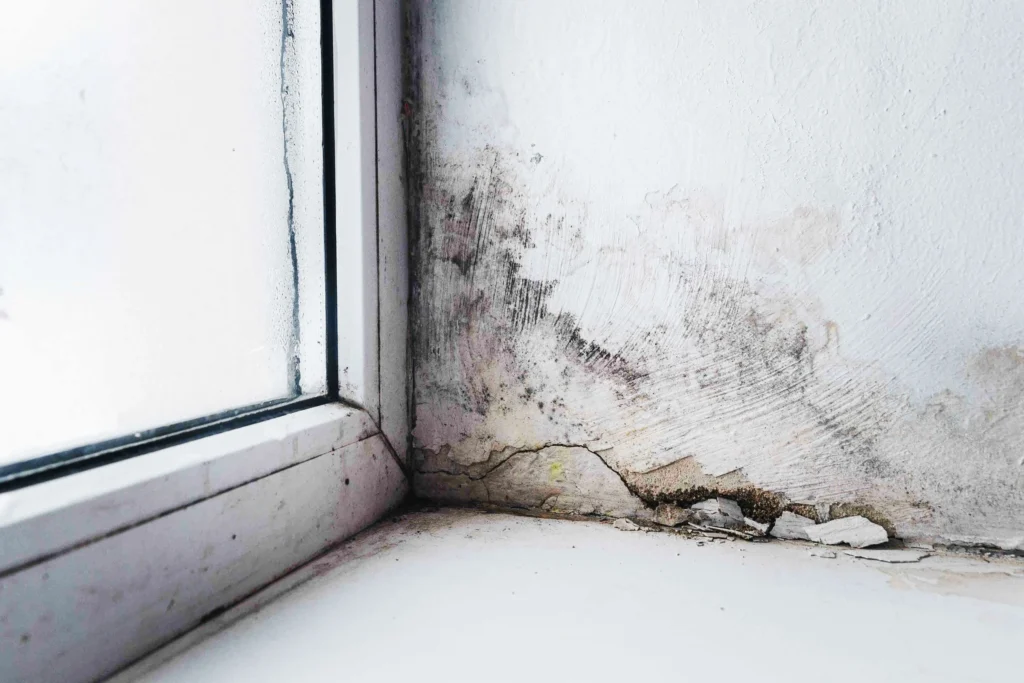
Many homeowners don’t realize their basement is the root of upstairs issues. Here are some subtle clues that your basement’s moisture is spreading:
If several of these symptoms occur at once, your basement likely needs immediate attention.
Once you understand the source of the moisture, the next step is taking corrective action. Here’s how to manage it effectively:
Make sure gutters and downspouts direct water at least 5–10 feet away from your foundation. Grading your yard to slope away from the house can also help prevent pooling water.
Hairline cracks may seem harmless, but they can allow water vapor to penetrate. Professional slab and crack repair seals these entry points before they expand.
In more severe cases, you may need a French drain or sump pump system to redirect groundwater away from the foundation.
If your home has a crawl space instead of a full basement, installing a dehumidifier can keep humidity levels balanced and prevent mold from spreading upward.
If foundation shifting or settling has occurred, house leveling or pier & beam repair may be necessary to restore structural stability and prevent future water intrusion.
Use exhaust fans, open windows when weather permits, and ensure HVAC ducts are clean and functioning properly. Proper airflow helps moisture evaporate instead of accumulating.
Moisture problems rarely fix themselves. In fact, they tend to grow — slowly but steadily. What begins as a damp smell or small patch of mold can evolve into serious structural damage that affects your home’s value and safety.
Ignoring moisture also means allowing foundation issues to worsen. In Houston’s shifting soils, that can lead to uneven floors, wall cracks, and even foundation failure over time. Addressing the problem early is not only more affordable but also helps protect your family’s comfort and health.
A damp basement is more than an inconvenience — it’s a sign that your home’s foundation and environment are under stress.Moisture doesn’t stay below ground; it travels upward, affecting your air quality, comfort, structure, and even your energy bills.
If you’ve noticed musty odors, sagging floors, or unexplained humidity in your Houston home, it’s time to act before the damage spreads.
A professional foundation specialist can identify whether the issue stems from drainage failure, cracks, or shifting soils and provide a long-term solution that truly protects your investment.
At My Safe Foundation, we specialize in keeping Houston homes strong, level, and dry. Our services include:
Don’t wait for basement dampness to creep upstairs!
Contact My Safe Foundation today and let our experts restore your home’s stability, comfort, and safety — from the ground up.